· 6 min read
What Was Aviation Cadet Training Really Like? Class 61-E, Told by a Man Who Was There
Fifteen months, as tough as it gets. Errol Severe graduated Vance AFB in 1961 and has been telling it straight ever since.
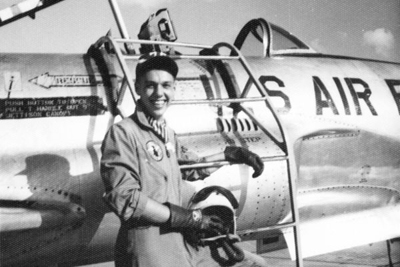
The Aviation Cadet program turned civilians into military pilots, navigators and bombardiers, and it did it by taking men who stepped off a train with no rank and no flying time and putting them through a pipeline designed to find the breaking point early. Errol D. Severe went through it and graduated.
“I do teach how it was — after all, I was there.”
Errol D. Severe, Class 61-E
Fifteen months at Vance
Errol graduated from the USAF Aviation Cadet Pilot Training Program at Vance Air Force Base in 1961, class 61-E — fifteen months, as tough as it gets. He flew KC-97 tankers on active duty, was hired by Delta Airlines in 1963, and retired in 1985. That sequence is worth sitting with: the program was hard enough that finishing it was the qualification, and the airlines knew it.
The pipeline, in the museum's own photographs
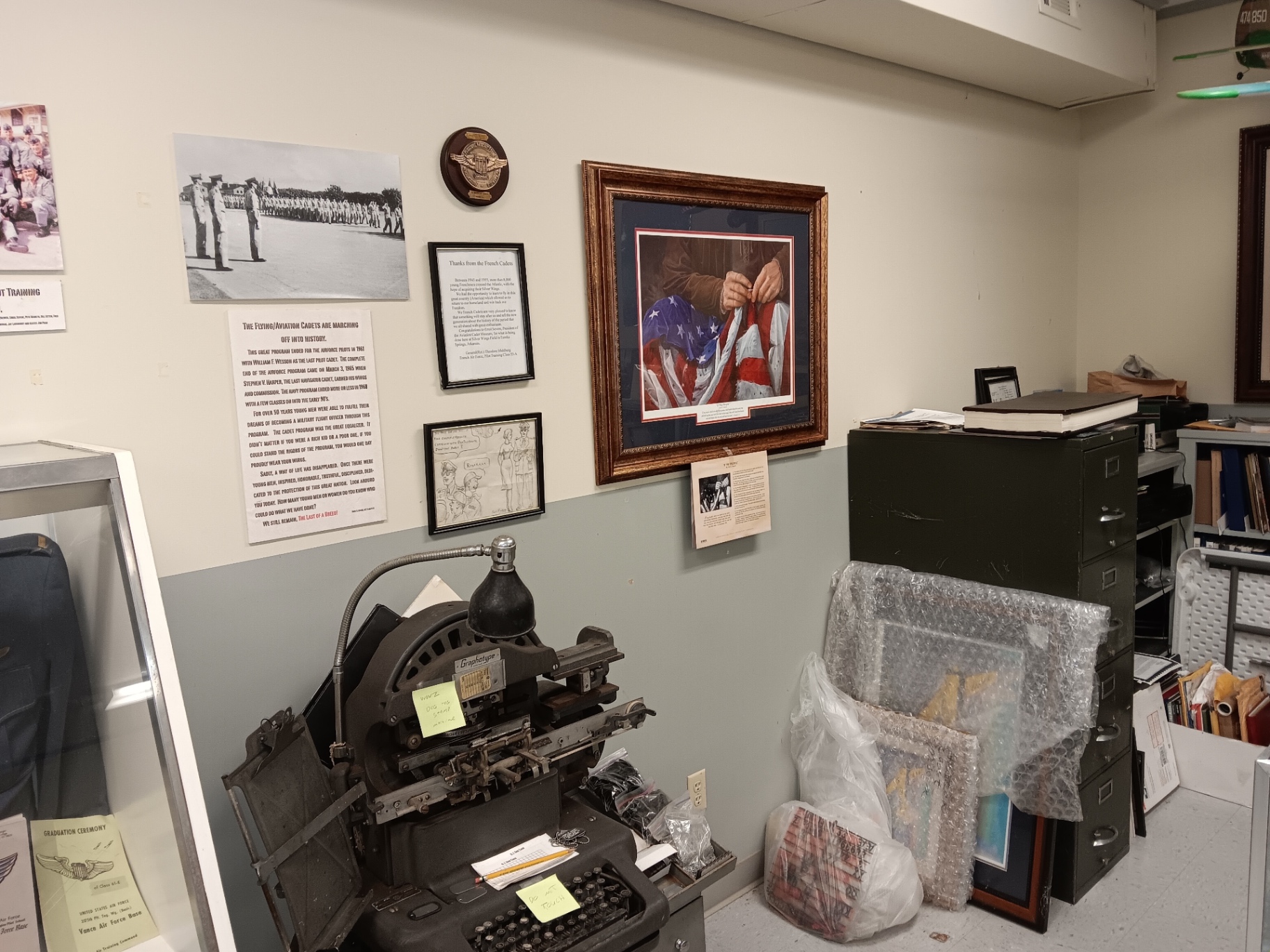
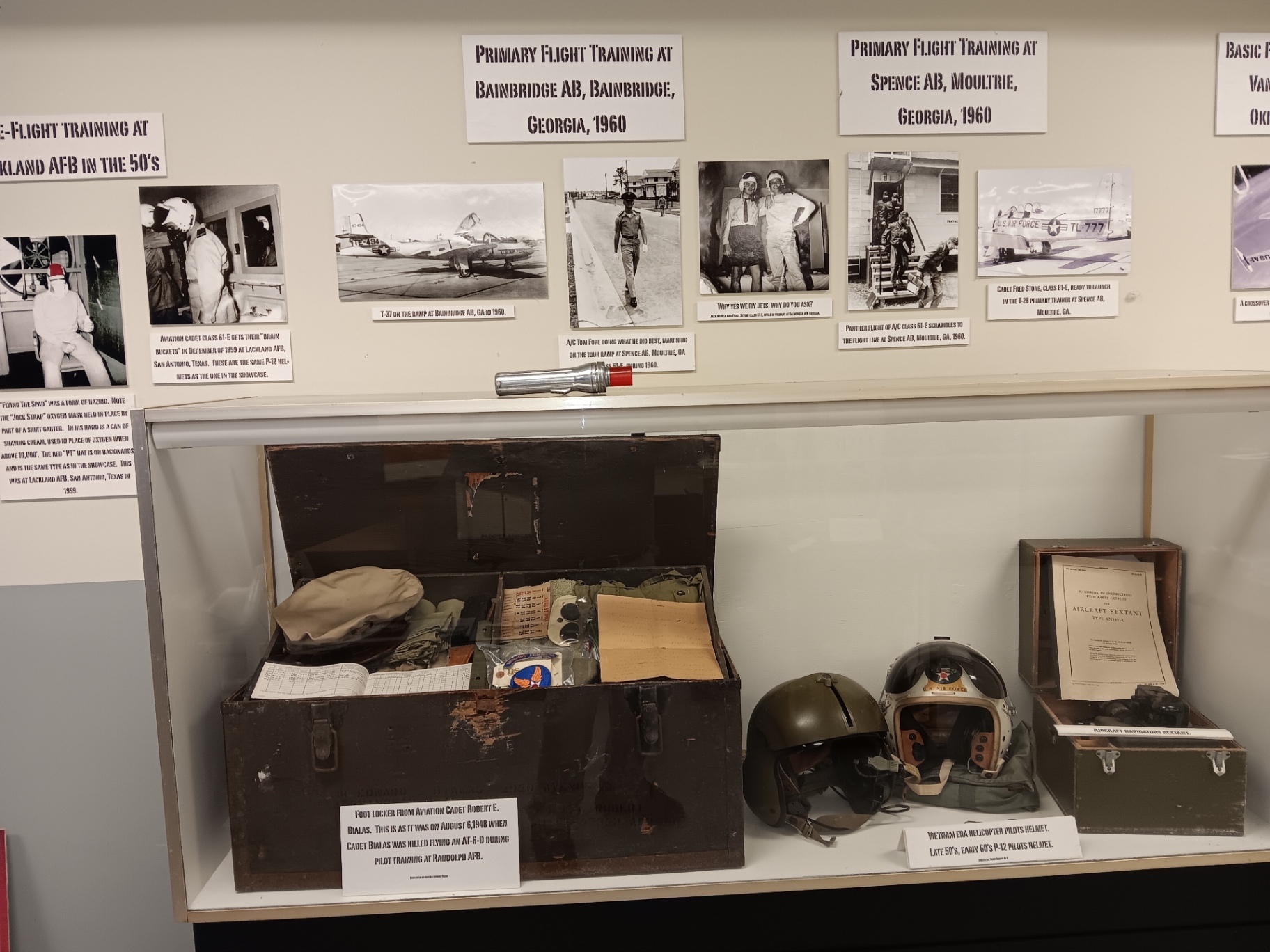
Primary training, basic training, then the aircraft. Ground school ran alongside all of it — navigation, weather, engines, procedures — because a cadet who could fly and not think was no use to anyone. Discipline was constant and deliberate, and washing out was ordinary rather than shameful.
The cost, when it came
One of the quietest exhibits in the museum is the foot locker of Aviation Cadet Robert E. Bialas, left exactly as it was the day he was killed flying an AT-6D in primary flight training in 1960. It sits beside a P-12 pilot's helmet. Nobody needs a caption explaining what the program asked of the men in it.
Learning to fly blind in a blue box
Instrument flying was taught on the ground first, in the Link Instrument Trainer — the “Blue Box” — a rig that pitched and turned on the shop floor while the cadet inside flew it on instruments alone. The museum's Link trainer is on display, with the plotting table opened up so you can see the linkage inside.
The end of the program
“The Flying/Aviation Cadets are marching off into history,” reads one of the displays. Errol wrote the book on it — “The Last of a Breed” — and organized the first Aviation Cadet reunion at Kelly Air Force Base in 1997, with 1,000 in attendance. In 1994 he and his wife Beth built Aviation Cadet World in the Ozark hills so the program would have somewhere to be remembered out loud.
“This will not be a dry museum; rather it will be a living experience — a place where every man, woman and child can travel back in time to the glory days of the Cadet Corps.”
Errol D. Severe, 1994
He still teaches every show himself, at 3:00 PM, in season. If you want the training story firsthand, that is where to get it.