· 4 min read
The Link Instrument Trainer: How the “Blue Box” Taught a Generation to Fly Blind
A trainer that never left the floor, and taught more pilots to fly in cloud than any airplane did.
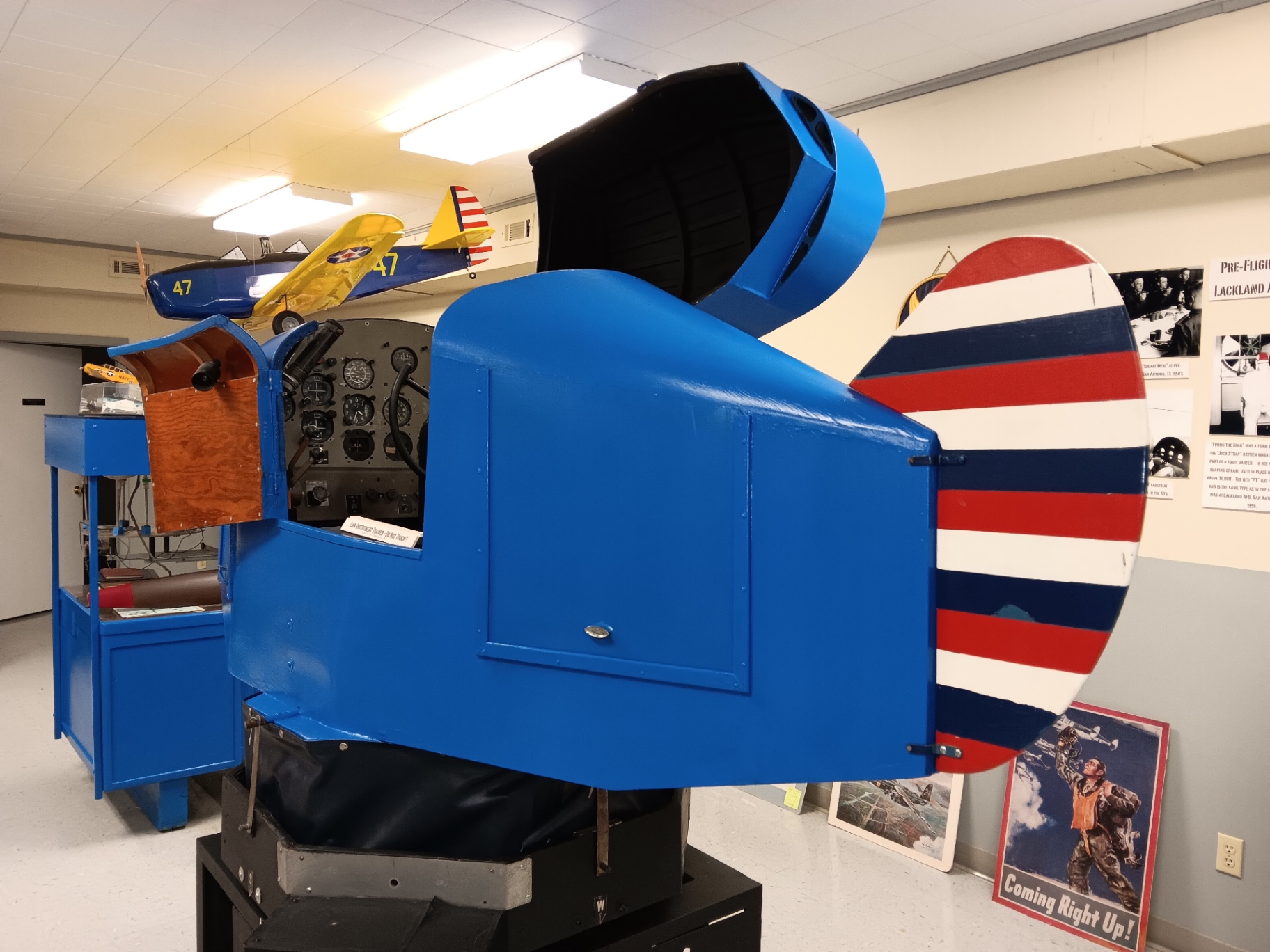
Flying in cloud is not a matter of nerve. It is a learned skill: believing instruments over your own inner ear, which will lie to you confidently and without pause. The Link Instrument Trainer existed to teach that skill somewhere a mistake cost nothing.
The Blue Box on the museum floor
The museum's Link trainer — red, white and blue tail and all — sits inside among the hand-built trainers and fighters hanging overhead. A cadet climbed in, the hood came down, and everything he knew about where he was came off the panel.
The plotting table, opened up
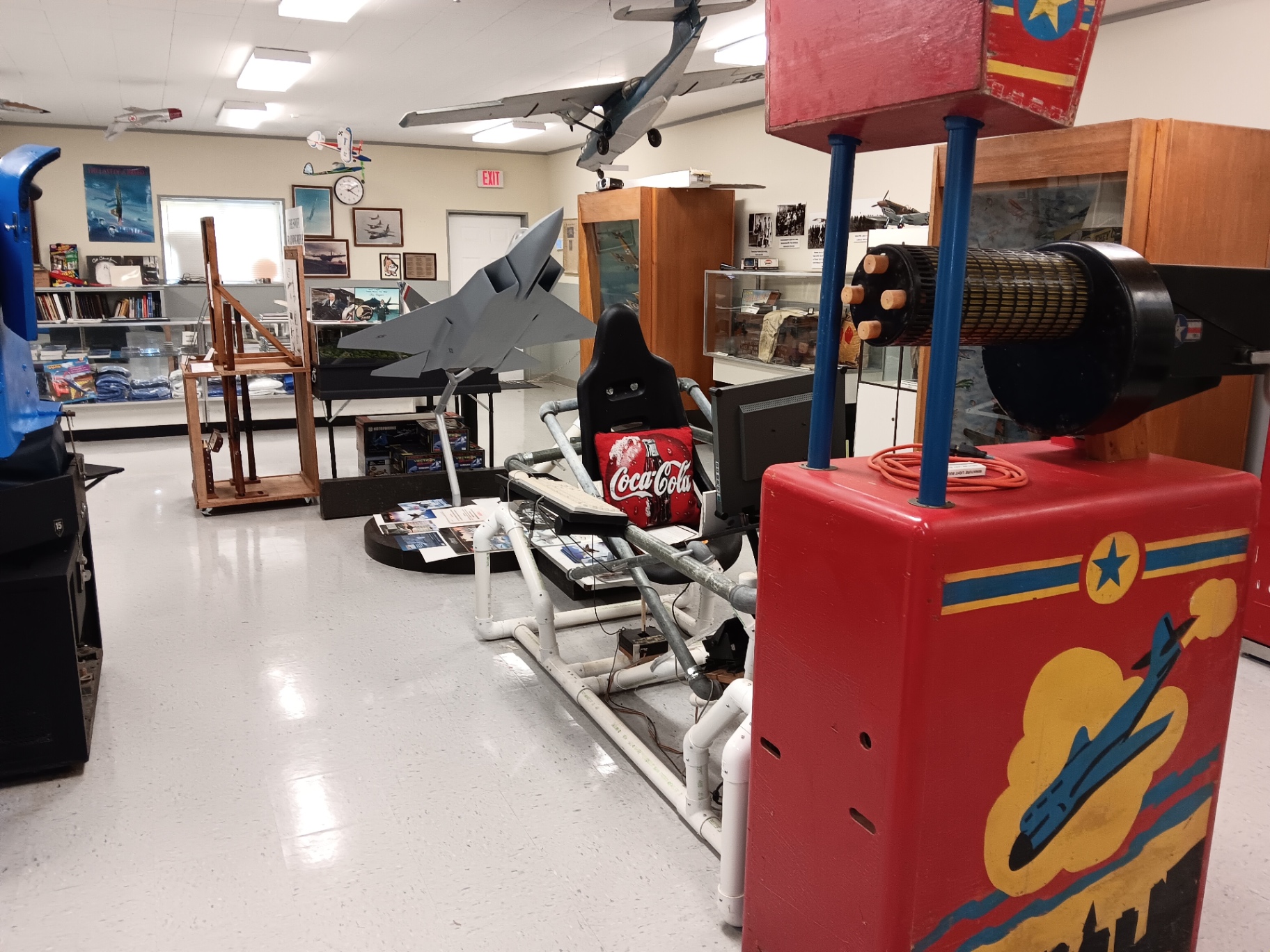
Beside it, the Link plotting table is displayed opened up so you can see the linkage inside: the mechanism that traced the cadet's flight path on paper while the instructor sat outside and watched him fly it. There was no hiding a sloppy approach from the trace.
Why it mattered to the Cadet program
The Aviation Cadet pipeline was built on the idea that ground work comes before air work. Instrument procedures, navigation, weather — cadets studied all of it, then flew it in the box until it was habit. The trainer is why instrument flying could be taught at scale, and to a schedule, during a war.
Its descendant is in the same room
A few steps away is the AeroBall SimCab — the only surviving example on earth of a simulator originally built at a cost of over three million dollars, and one visitors get to fly themselves. Same idea, sixty years of technology apart: let someone fail on the ground first.
Both are part of the 3:00 PM show, one show per day, April 1 through October 31, closed Sundays. Reservations required.