· 6 min read
Inside the Museum: 23 Exhibits Worth the Drive
The airplanes get the photographs. The exhibit halls are where the program's story actually lives.
The airplanes are outdoors, on the grass, and they are what people photograph. Inside is where the Aviation Cadet program is actually documented: uniforms, foot lockers, flight helmets, training rigs, and the artifacts that came home with the men who wore them. Twenty-three of those exhibits are photographed in our museum gallery — here are the ones visitors stop at longest.
The cadet pipeline wall
Civilians step off the train; sweat and study turn them into Army Air Corps pilots, navigators and bombardiers. The whole program in one wall of photographs, and the right place to start.
Cadet Robert E. Bialas's foot locker
Primary flight training, 1960. The locker was left exactly as it was the day he was killed flying an AT-6D, and it sits beside a P-12 pilot's helmet. It is the quietest case in the building.
Vance AFB, 1960
Basic flight training at Vance AFB in Enid, Oklahoma: a cadet bush jacket and shoulder boards, the red “Red Bird Squadron” PT hat, and Errol's own graduation program.
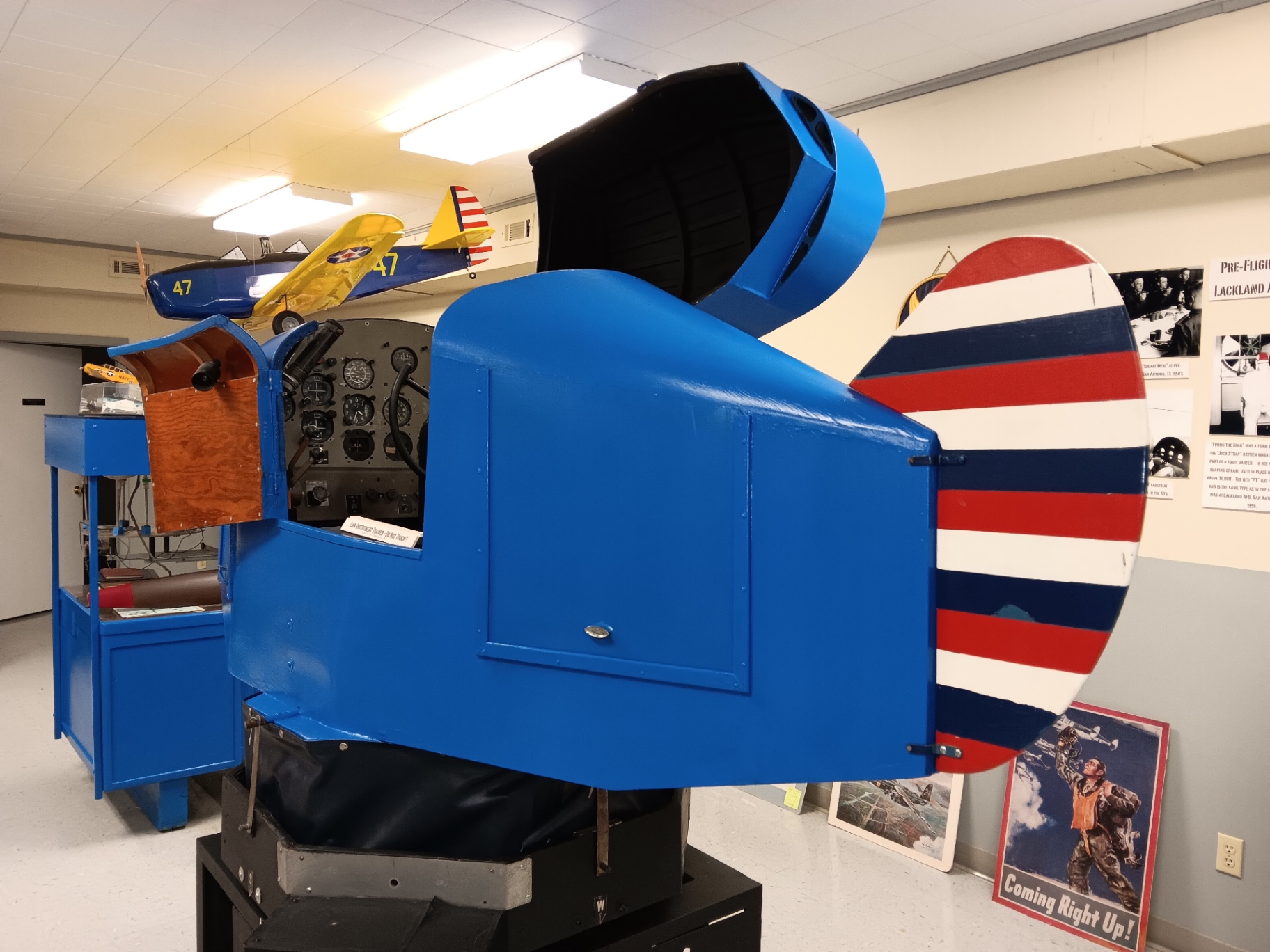
The Link Instrument Trainer
The “Blue Box” that taught a generation of cadets to fly on instruments alone, red-white-and-blue tail and all — with the plotting table opened up nearby so you can see the linkage working inside.
The Swift Training Rifle
A WWI marksmanship trainer that taught recruits to shoot before live ammunition was ever issued to them.
Target Kite, Mark I
Flown off the carrier USS Wasp so anti-aircraft gunners could practice against a Japanese silhouette — a solution nobody expects until they see it.
The “Smiling Jack” storyboard
Silver pilot wings displayed with the one-and-only original “Smiling Jack” storyboard, hand-drawn by Zack Mosley for the June 15, 1958 Sunday papers.
The uniform cases
A 1930s USAAC Flying Cadet leather flight jacket above a WWII cadet case — wool shirt, white gloves, dark blue hat band, wartime sewing kit. Further along, a WWI summer uniform coat with Sam Browne belt and campaign hat, the white hat band marking a Flying Cadet.
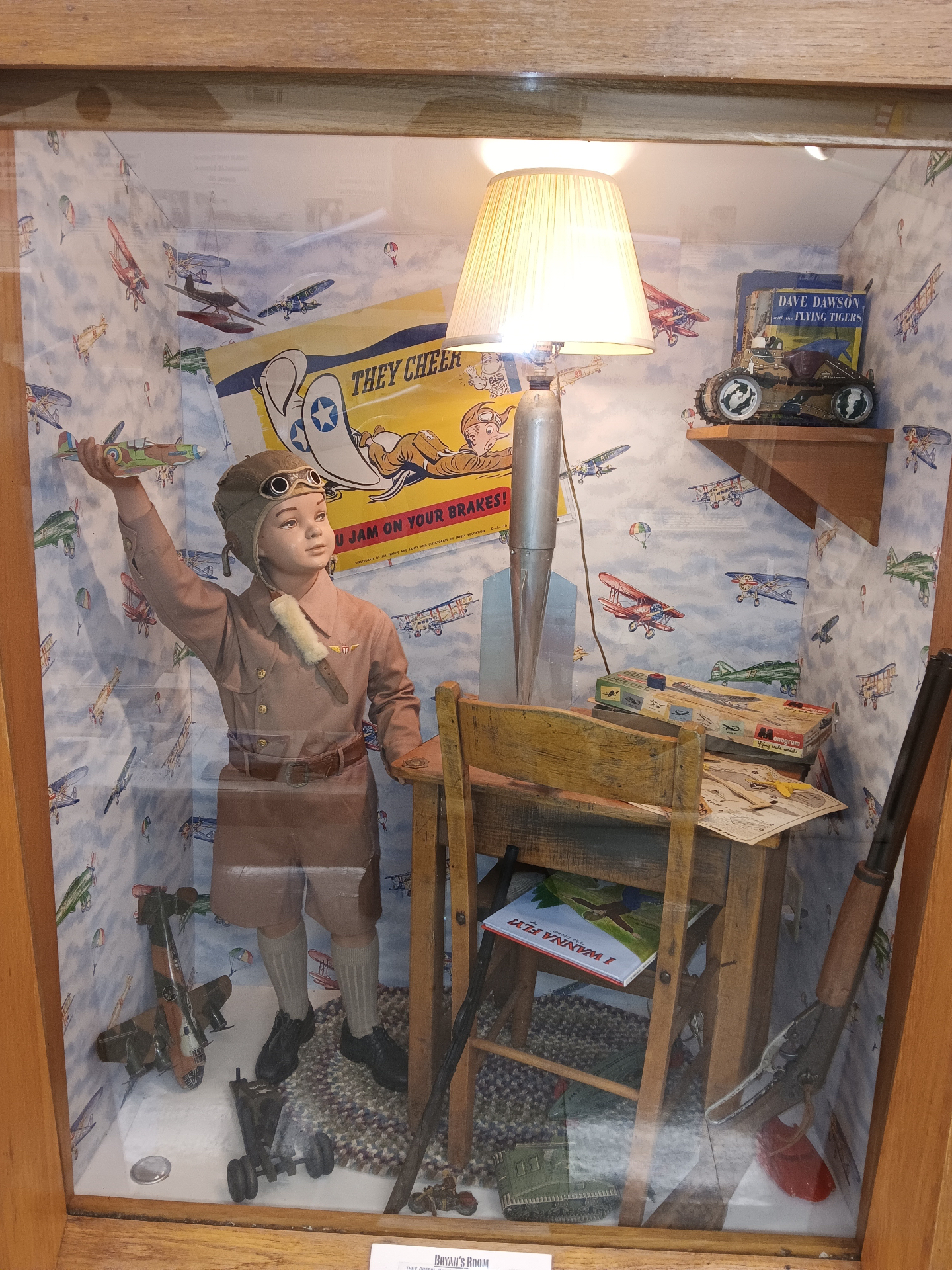
Bryan's Room
A 1940s boy's bedroom recreated down to the airplane wallpaper, bomb-casing lamp, school desk, model kits and a “Dave Dawson with the Flying Tigers” novel. It is the exhibit grandparents linger in.
The 1940s Coca-Cola machine
Still working, beneath prints of the Curtiss Hawk P1-C and Boeing P-12E flown by Flying Cadet Ed Tindall at Kelly Field.
See all 23
Every exhibit above is photographed and captioned in the museum gallery, and all of it is included with the 3:00 PM show — adults $20, children ages 7–12 $10, reservations required.